
Speed is not the same as judgment. That distinction matters more than ever right now.
AI has fundamentally changed what it costs to build and validate. Small teams can go from idea to working product in days. You can get real data, feel where an experience breaks down, and iterate before most teams have finished their first research sprint. The validation cycle has not disappeared. It has just moved earlier and gotten faster.
But faster iteration only gets you more signals. It does not tell you what to do with them.
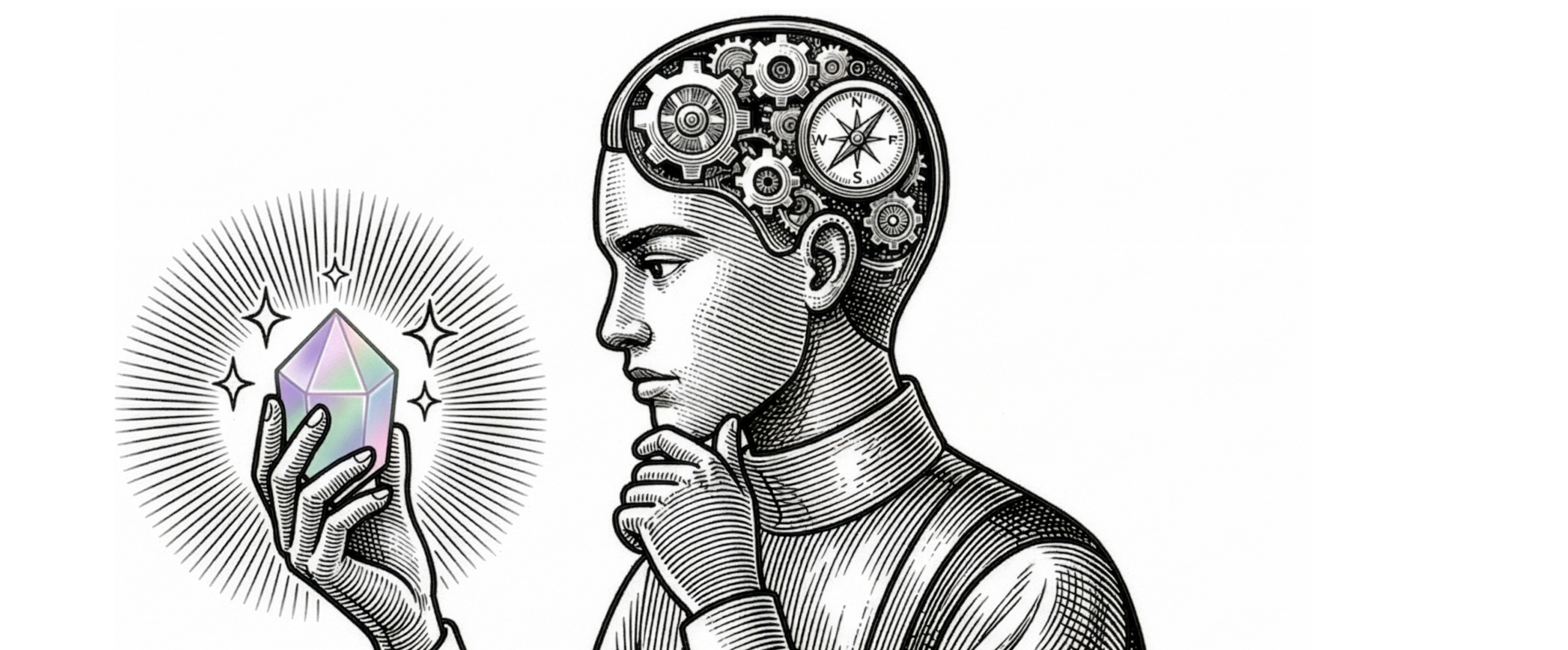
That is where taste comes in. And taste is worth taking seriously as a concept, not dismissing it as instinct or pattern recognition. Yes, taste involves recognizing what has worked. But more importantly, it involves knowing why it worked, for whom, and under what conditions it stops working. That requires a point of view. A point of view comes from lived experience, not just from exposure to data.
Virgil Abloh did not succeed because he studied fashion patterns. He succeeded because he understood what it felt like to be excluded from certain spaces and designed from that tension. Dieter Rams' principles still resonate not because they tested well but because they reflected deeply held human values about honesty and restraint. Neither of those things live in a dataset.
AI is an extraordinary tool. In the hands of someone with deep domain expertise and a genuine point of view, it produces remarkable work. But the expertise and the point of view still have to come from somewhere. They come from time, from failure, from caring about something enough to develop real judgment around it.
The process is changing. The craft still matters. Maybe more now than ever, because the gap between people who have genuine taste and a fundamental understanding of their domain and those who are approximating it is going to become much more visible, much faster.